
Capacity Grants Are Quiet Reporting Obligations: What a Strategic Plan Must Contain to Become a Capability

In today’s competitive funding environment, a capacity grant can strengthen your organization while quietly adding responsibilities for measurement, data quality, and follow-up. If you lead a nonprofit, you often have the grant deliverable covered, but no staff time reserved to show what changed or how the new system is performing. This is where building a reporting capability into the work becomes invaluable. A strategic plan or redesigned website should leave you with more than a finished deliverable: it should leave you with a repeatable way to learn and report.
1. The Awards, Stated Plainly
The Community Foundation of Southern Indiana (CFSI) announced $61,500 for five nonprofits serving Clark and Floyd counties on October 14, 2026. The awards came from its unrestricted Community Impact Fund and support both direct services and organizational improvements. You can read the details in CFSI’s release.
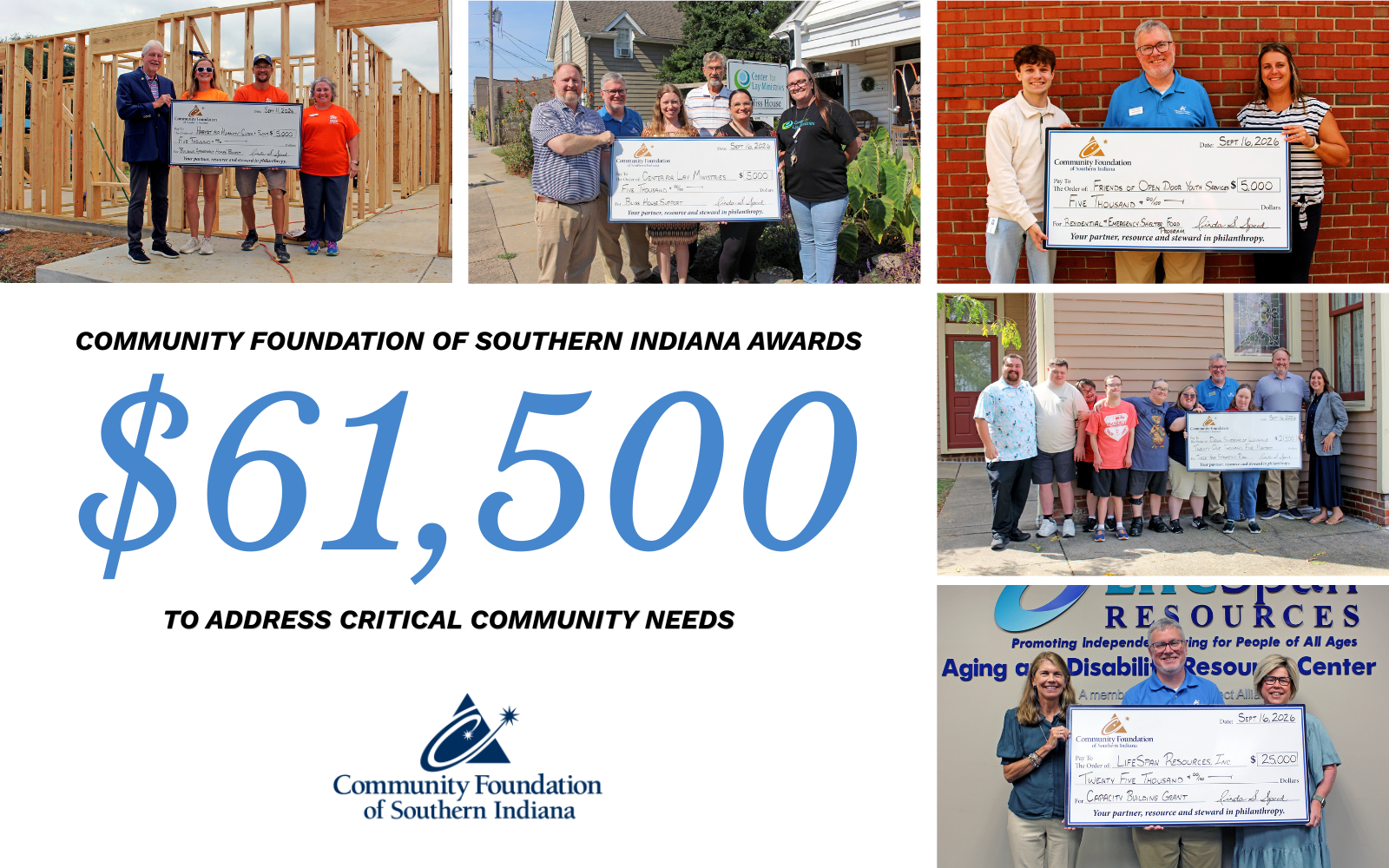
The awards include two explicitly focused on organizational infrastructure:
LifeSpan Resources, Inc. $25,000 Capacity Building Grant to modernize its website, improving how residents access information, connect with staff, and register for services.
Down Syndrome of Louisville: $21,500 to develop a comprehensive three-year strategic plan focused on strengthening programs, expanding equitable access to services, and identifying opportunities to better serve individuals with Down syndrome and their families.
The other three grants support specific community needs: Habitat for Humanity Clark & Floyd Indiana received $5,000 for its Building Affordable Homes program; Friends of Open Door Youth Services received $5,000 to provide meals and snacks for approximately 125 youth in residential, emergency shelter, and runaway/homeless youth programs; and Center for Lay Ministries received $5,000 for Bliss House, its long-term residential recovery program for women overcoming substance use disorder.
Each award supports important work. The practical question for your organization is what happens after the visible deliverable is complete.
2. Capacity and Reporting Belong Together
Capacity dollars can build the infrastructure that helps your organization generate evidence. But when you fund only the visible deliverable (a website, a plan, or a new tool) you may also create a quiet obligation to explain what that investment accomplished, without a system to answer.
Two of CFSI’s five awards are explicitly about organizational infrastructure: a website modernization and a strategic plan. Neither award is a criticism or a guarantee of future reporting requirements. They are useful examples of how infrastructure work can change what your organization needs to track. When you build a plan, you may need to report progress against its priorities. When you build a website that supports online service registration, you may need to manage new intake information consistently.
For example, if a funder asks how your strategic priorities are progressing six months later, a plan with broad goals but no measures will not give you a reliable answer. A measurement system connects the investment to decisions, reporting, and learning. That is why capacity and reporting work best as parts of the same investment.
3. Make Your Strategic Plan a Capability
A strategic plan becomes an operating capability when your team can use it to make decisions and show progress, not just refer to it in meetings or grant applications. Bridgespan’s guidance on nonprofit measurement and learning emphasizes reviewing measurement data and using it to inform action. In practice, your plan needs a compact measurement system built into it.
Start with 3–5 strategic goals, each paired with a named outcome measure. Then make sure your plan-within-the-plan includes:
A plain-language definition of each measure, including what counts and what does not.
A baseline captured during the planning process, while your team is already examining current conditions.
A named owner for each measure, responsible for keeping the information current.
A review cadence, monthly or quarterly, matched to how quickly your team needs to respond.
A dashboard or one-page scorecard that makes progress, gaps, and next steps visible.
For example, if a goal is to improve access to services, you might define a measure such as the share of eligible applicants who complete registration. Your definition should specify the numerator, denominator, time period, and data source; your baseline establishes the starting point. A quarterly review can then surface a barrier to registration early enough for your team to respond.

A measure without an owner can go stale. A baseline without a definition can be misunderstood. Together, a clear KPI, a responsible staff member, and a regular review turn strategy into work your organization can manage.
4. Modernize Your Website Without Creating Data Debt
A modernized website can change the information your organization collects. New online forms may make it easier for residents to request information or register for services, but each new field can also create work for the staff who must enter, correct, protect, and report on that data.
Before launch, define the purpose of every intake field. Document how staff should enter or correct information, where submissions go, who is responsible for them, and how the new data will connect to existing reports. Where required, include clear consent and privacy statements. Identify a named data steward who can oversee definitions, access, quality checks, and follow-up.

For example, if your new form asks how a person heard about your services, decide how staff will categorize an answer such as “friend” or “online.” Without a consistent process, similar responses may be recorded several different ways, making the resulting report less useful. Guidance from UN-Habitat on monitoring and reporting also stresses documenting responsibilities and collecting evidence regularly. Your website project should include that ownership and workflow, not just the public-facing design.
5. Plan for the Question Nobody Owns
At organizations with $250,000–$10 million in annual funding or revenue, a capacity project may not come with a new analyst or dedicated reporting staff member. The responsibility can land between development, programs, and operations: development may receive the funder question, program staff may hold the data, and leadership may need to explain progress to the board.
Who answers, “How is the strategic plan going?” six months later? You can answer confidently when the plan already established a KPI library, baseline, owner, review rhythm, and reporting format. Without them, your team may have to reconstruct progress from meeting notes, spreadsheets, and individual memory. The Genesis Board + Funder Reporting System offers a practical example of the components a repeatable reporting structure can include, such as a KPI dictionary, scorecard template, and funder-reporting framework.
For instance, when a quarterly review identifies a measure that is behind target, your team can document the variance, the reason, and the next action. That record can support a board discussion and a future funder update without making one person rebuild the story from scratch.
6. Budget for the System, Not Just the Deliverable
A practical starting point is to reserve 10% of a capacity award for measurement infrastructure: definitions, baseline, ownership, review cadence, and a dashboard or scorecard. Treat this as a planning rule of thumb, not a funder requirement, and check the award terms before allocating grant dollars.
For example, a project budget can name the website or strategic plan as a deliverable and also specify the reporting tools, staff handoff, and quality checks needed to sustain it. If the system is part of the project plan, your team can build it while decisions are being made, rather than trying to add it after launch. A clear monthly or quarterly reporting rhythm can also help you spot data or implementation issues before the next board meeting or grant application.
Final Thoughts
Capacity grants can create durable value when you pair the visible deliverable with the measurement system that helps you operate and explain it. A strategic plan needs defined measures and ownership; a website modernization needs purpose-built intake fields and data stewardship. If you are receiving capacity dollars, or preparing to apply, consider building the KPI library and monthly reporting cadence into the grant-period work.
Genesis Consulting’s Reporting Diagnostic can help you turn capacity funding into a capability with practical KPI definitions, a scorecard, and a repeatable reporting rhythm. Explore the reporting system or book a free consultation to discuss your next steps. Start with the system that will help your organization keep learning and reporting long after the grant deliverable is complete.
Comments